Indie Authors vs. Traditionally Published Authors: Key Differences
Sunday, May 03, 2026
In 2011, a thriller writer named John Locke became the first self-published author to sell over a million Kindle ebooks. Around the same time, a traditionally published debut novelist watched her book sit on a warehouse shelf for six months before a single copy reached a bookstore. Both were talented writers. Both had poured years into their craft. But the paths they chose shaped their careers in radically different ways.
If you're an author standing at this crossroads - indie publishing versus traditional publishing - you're not alone. It's one of the most consequential decisions a writer can make, and there's no universally right answer. What matters is understanding the real, practical differences so you can choose the path that aligns with your goals, temperament, and vision.
Creative Control: Your Book, Your Rules - Or Not
Let's start with the difference authors feel most viscerally: creative control.
When you self-publish, every decision belongs to you. The cover art, the title, the interior formatting, the blurb, the price point, and - most critically - the content itself. No editor at a publishing house will ask you to cut your favorite chapter because it "slows the pacing." No marketing team will insist you change your title to something more "commercial."
Consider the case of Andy Weir. Before The Martian became a blockbuster film, Weir self-published it on his website, chapter by chapter, because no agent would touch a hard-science-fiction survival story packed with orbital mechanics equations. Readers loved it precisely because of those details - the very elements traditional gatekeepers wanted removed.
On the flip side, traditionally published authors often describe the editorial process as genuinely transformative. A skilled developmental editor at a major house can see structural weaknesses you've gone blind to after your fifteenth draft. Author Celeste Ng has spoken about how her editor's feedback on Everything I Never Told You pushed the novel to a level she couldn't have reached alone.
The trade-off is real: you gain expert guidance, but you cede final authority. Your publisher may choose a cover you dislike. They may retitle your book. They will almost certainly have contractual approval over your final manuscript.
Distribution: Getting Your Book Into Readers' Hands
This is where traditional publishing still holds a significant structural advantage - though the gap is narrowing.
Major publishers like Penguin Random House, HarperCollins, and Simon & Schuster have distribution networks that have been built over decades. They have dedicated sales teams who pitch books to Barnes & Noble buyers, independent bookstore owners, airport retailers, and library acquisition departments. When a traditionally published book launches, it can appear on shelves in thousands of physical locations simultaneously.
For indie authors, physical distribution remains the hardest nut to crack. Yes, services like IngramSpark make it technically possible for self-published books to be ordered by bookstores. But "available for order" and "actively stocked on shelves" are very different things. Most bookstores are reluctant to stock self-published titles without a proven sales track record.

However, here's the counterpoint: the vast majority of book sales today happen online, and Amazon dominates that marketplace. Indie authors on Amazon's Kindle Direct Publishing (KDP) platform have access to the same digital storefront as the Big Five publishers. In genres like romance, science fiction, and fantasy, self-published authors regularly outsell their traditionally published counterparts on Amazon's bestseller lists.
The key question becomes: where do your readers buy books? If your audience lives on Kindle and listens to audiobooks on Audible, the distribution gap may be irrelevant. If you're writing literary fiction that depends on bookstore placement, review coverage, and library adoption, traditional publishing's infrastructure becomes much harder to replicate.
Marketing: Who's Actually Doing the Work?
Here's a truth that surprises many aspiring authors: regardless of which path you choose, you will be doing most of the marketing yourself.
The romanticized image of a publisher handling everything - booking you on talk shows, arranging a multi-city book tour, placing full-page ads in the New York Times - is reserved for a tiny fraction of authors. Unless you're already a celebrity or you've received a seven-figure advance, your publisher's marketing support will likely consist of sending out review copies, listing your book in their seasonal catalog, and perhaps arranging a modest social media push.
One mid-list traditionally published author I know described her marketing experience this way: "My publisher sent me a PDF with social media tips and wished me luck. That was the extent of my marketing support." She spent her own money on Facebook ads, organized her own blog tour, and built her own email list - exactly the same activities her indie-published friends were doing, while her publisher was making the lions-share of the profit from every sale.
The difference is that indie authors often embrace this reality from day one. They learn Amazon advertising, build reader communities, master email marketing, and develop launch strategies. Many indie authors treat their writing career as a small business - because that's exactly what it is.
- Indie authors control their ad spend, can pivot strategies instantly, and keep all data about their readers
- Traditionally published authors may benefit from co-op placement in bookstores, publisher-arranged media coverage, and the credibility of a known imprint
- Both need to build a platform, engage with readers, and actively promote their work to succeed
Financial Dynamics: Royalties, Advances, and the Bottom Line
This is where the conversation gets really interesting - and where the numbers tell a story that might surprise you.
In traditional publishing, a typical debut author might receive an advance of $5,000 to $25,000. That advance is paid against future royalties, which generally run between 8% and 15% of the book's list price for print editions and around 25% of net receipts for ebooks. Crucially, you don't earn additional royalties until your book has "earned out" the advance - and sadly, the majority of traditionally published books never do.
Let's put that in concrete terms. If your traditionally published ebook is priced at $12.99 and the publisher receives roughly $9.00 from the retailer, your 25% royalty is about $2.25 per sale.
Now compare that to indie publishing on Amazon KDP. If you price your ebook at $4.99 and select the 70% royalty option, you earn approximately $3.44 per sale. You're earning more per copy at a lower price point - and you're likely selling more copies because of that lower price.
This math is why authors like Mark Dawson, who publishes a successful thriller series independently, has reported earning over a million dollars a year. It's also why romance author H.M. Ward turned down a $500,000 traditional deal - she was already making more on her own.
But the financial picture isn't one-sided. Traditional advances provide guaranteed income before a single copy sells. For authors who need financial stability while writing their next book, that upfront payment can be life-changing. And publishers absorb the cost of editing, cover design, and production - expenses that indie authors must pay out of pocket, often totaling $2,000 to $5,000 or more per book.
The Speed Factor: Timing Is Everything
One often-overlooked difference is speed to market. Traditional publishing moves slowly - deliberately so. From the moment you sign a contract, it typically takes 12 to 24 months before your book hits shelves. The editorial process, cover design, catalog placement, and pre-order campaigns all require time. Oh and don't forget, you will first need an agent before a publisher will even talk to you, so that hurdle is the one you start with.
Indie authors can publish a book within weeks of completing their final draft. This speed advantage compounds over time. A prolific indie author can release four to six books a year, building a backlist that generates passive income and keeps them visible in Amazon's algorithms. Many successful indie authors describe their backlist as a "snowball" - each new release drives sales of previous titles.
Traditionally published authors typically release one book per year, sometimes one every two years. This slower cadence can make it harder to maintain reader momentum, especially in genre fiction where readers consume books voraciously.

Validation, Prestige, and the Emotional Side
Let's be honest about something that doesn't show up in spreadsheets: for many writers, a traditional publishing deal carries emotional weight. Having an agent believe in your work, receiving an offer from an editor at a respected house, seeing your book in a physical bookstore - these experiences matter deeply.
There's also the question of literary legitimacy. Rightly or wrongly, certain awards, review outlets, and literary communities still favor traditionally published works. If winning a Pulitzer, being reviewed in the New York Times Book Review, or being shortlisted for the Booker Prize is part of your vision, traditional publishing is essentially the only viable path.
But the stigma around self-publishing has eroded dramatically. When indie authors consistently hit bestseller lists, when readers genuinely don't care (or even notice) who published a book, and when the quality gap has narrowed thanks to professional freelance editors and designers, the old prejudices carry less weight than they once did.
The Hybrid Path: Why Choose Just One?
Increasingly, savvy authors are refusing to pick a single lane. The "hybrid author" - someone who publishes some works traditionally and others independently - is becoming more common.
Brandon Sanderson, one of the most successful fantasy authors alive, made headlines in 2022 when his Kickstarter campaign for four self-published novels raised over $41 million. He continues to publish his flagship series through Tor Books (a major traditional publisher) while independently releasing other projects. He gets the best of both worlds: the prestige and distribution of traditional publishing for his main series, and the creative freedom and financial upside of indie publishing for everything else.
You don't need to be Brandon Sanderson to adopt this approach. Many authors use traditional publishing for their primary genre and self-publish passion projects, novellas, or works in different genres that their publisher isn't interested in.

So, Which Path Is Right for You?
There's no universal answer, but here are some honest guideposts:
Indie publishing might be your path if:
- You want complete creative control over every aspect of your book
- You're comfortable learning the business side of publishing or using paid services
- You write in genres where ebook sales dominate (romance, thriller, sci-fi, fantasy)
- You can produce multiple books per year and want to build a backlist quickly
- You're willing to invest upfront in professional editing, cover design, and marketing
- Higher per-book royalties and long-term income potential excite you
Traditional publishing might be your path if:
- You value the editorial partnership and developmental feedback a publishing house provides
- Physical bookstore placement and library distribution are important to you
- You're writing literary fiction, narrative nonfiction, or memoir where traditional review coverage matters
- You want an advance to provide financial stability while you write
- Awards, critical recognition, and literary prestige are part of your goals
- You'd rather focus on writing and leave production and distribution to professionals
Here's what I want to leave you with: neither path is a compromise. Indie publishing is not a consolation prize for authors who couldn't land a deal. I was Traditionally published before I bought back my rights and became self-published (that's a story for another time.) Traditional publishing is not an outdated relic for authors afraid of technology. They are two legitimate, viable, and increasingly respected ways to build a writing career.
The best choice is the one that serves your specific goals - your creative vision, your financial needs, your definition of success, and the kind of writing life you want to live. Some authors dream of seeing their name on a bookstore shelf. Others dream of waking up to royalty deposits that let them write full-time without answering to anyone.
Both dreams are valid. Both are achievable. The only wrong choice is the one you make without understanding what you're choosing.
So... What is an Indie Author?
Up until now, I've avoided actually defining an Indie Author, because there are two definitions that you'll find floating around the Internet.
The Traditional Publishers through their trade organizations, define an independent author as:
An independent author is not published by the Big 5
The Big 5 - used to be the Big 6 - are the large publishers who control the traditional publishing industry.
The hubris of this group is legendary, and one of the things that real independent authors have had to deal with ever since we became able to publish without them.
The Alliance of Independent Authors defines an "Indie" or "Independent Author" As:
An independent author is a rights-holding publisher of their own work.
The Simplest Way to Frame It
Instead of asking:
- Is the publisher big or small?
Ask:
- Who owns the rights?
- Who controls pricing an distribution?
- Who makes all the final decisions?
If the answer is The Author Does - They are Independent
If the answer is The Publisher Does - They are Traditionally published
So ask yourself: What does success look like for me? Start there, and the path will become clear.
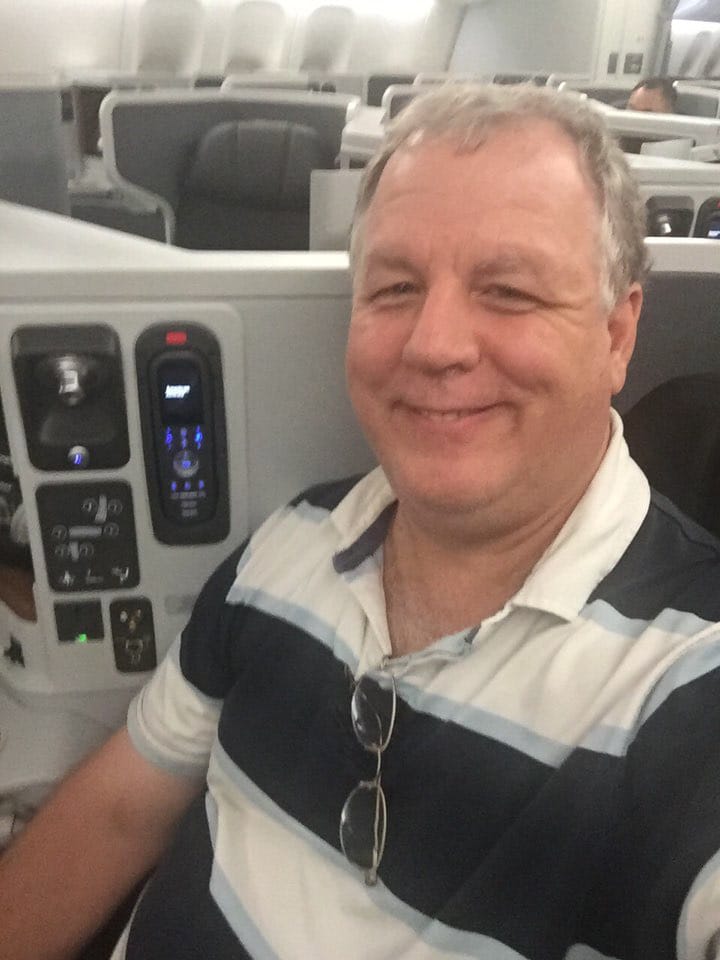
Hi, I'm Tim Hewitt
CEO of AuthorHub.io
I won my first writing scholarship in high school by beating more than 300 other writers in a nationwide contest, and that award gave me something money couldn't buy: the belief that my words mattered. Since then I've spent decades learning what makes writing work: how to find your voice, how to keep readers turning pages, marketing that really sells books, and how to spot the small craft problems that quietly sink good stories. This blog is where I share everything I've picked up along the way.