Self-Editing Your Book: The Brutal Truth No One Wants to Tell You
Saturday, October 10, 2026
"I can't afford an editor" gets said in indie author forums like it settles the matter. It doesn't. It's not an excuse to skip editing, it's a confession that you're about to skip a step you know matters and hope nobody notices. Here's the distinction that gets blurred on purpose: not being able to hire a professional is a budget problem. Publishing a book with zero editing is a decision. Those are not the same thing, and only one of them is defensible.
One Read-Through Is Not Editing
Somewhere along the way, "I edited my book" started meaning "I read it once before uploading it." That's not editing. That's proofreading a first draft, at best, and it's usually not even that.
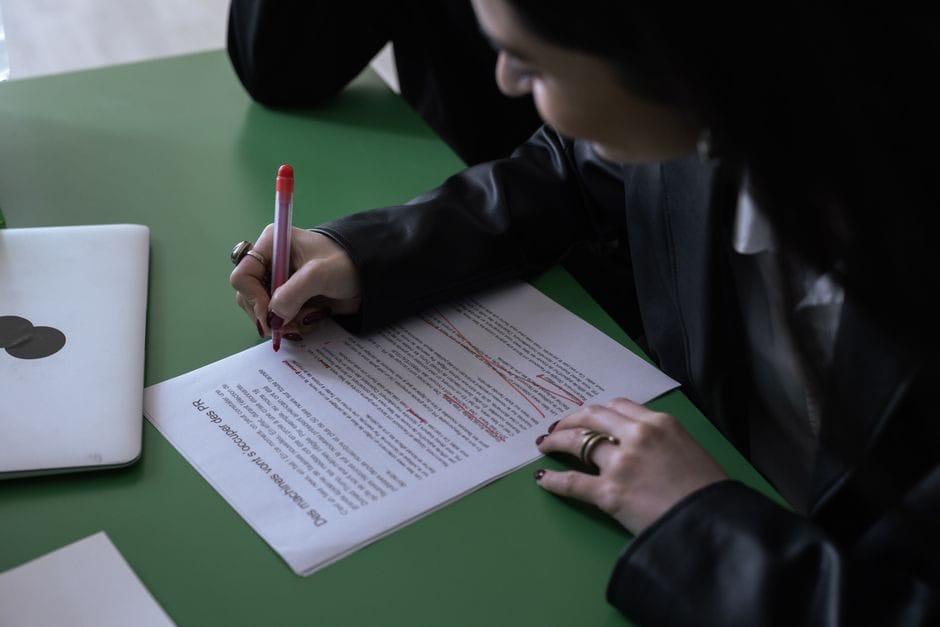
Real editing is layered, and each layer catches something the others can't. A developmental or structural pass asks whether the story works at all: does the plot hold together, does the pacing sag in act two, does your protagonist's arc actually arrive anywhere. Line editing comes next, working sentence by sentence for clarity, rhythm, and voice. Copyediting hunts grammar, consistency, and continuity, the character whose eyes change color between chapters five and eleven. Proofreading is the final sweep for typos and formatting errors, done after everything else, not instead of it.
Skip any one of these and it shows. Skip all of them and do one read-through instead, and you haven't edited your book. You've skimmed it.
You Are the Worst Person to Edit Your Own Book
This isn't an insult. It's a documented fact about how brains process familiar text. When you read your own manuscript, you read what you meant to write, not what's actually on the page. Your brain autocorrects the missing word, fills in the sentence you intended, and glides past the typo because it already knows what's supposed to be there.
You're also too close to the material to see it clearly. You know why the pacing slows in chapter nine, so it doesn't register as slow to you. You know the backstory that never made it onto the page, so the plot hole reads as coherent to you and only to you. You cannot hear your own verbal tics, the way every character "sighs" or "shrugs" or starts sentences with "well," because you've been hearing your own voice in your head the entire time you wrote it.
A stranger catches in thirty seconds what you missed in thirty drafts, because a stranger has no memory of what you meant to say.
The Consequences Are Real and They Don't Go Away
Publish a book riddled with errors and here's what actually happens, not in theory, but in practice, every single day on Amazon.
- Reader trust breaks the moment they hit the third typo, and it doesn't come back for that book or your next one
- Reviews start mentioning "needs an editor" and "riddled with typos," and those reviews are permanent, public, and directly tank your conversion rate
- Poor ratings hurt your visibility in the algorithm, so fewer readers ever see the book to begin with
- You lose the ability to run paid ads effectively, because platforms and readers both punish low ratings, and legitimate review outlets and bloggers won't touch a book with visible quality problems
- The damage attaches to your author brand, not just the one book, meaning readers who bounce off book one never give book two a chance
None of this is reversible with an apology or an updated file six months later. First impressions in publishing are not renewable resources.
But What About the Famous Exceptions?
You already know the counterargument, because someone in a Facebook group has already made it. Fifty Shades of Grey started as fanfiction, was widely mocked for its prose, and sold over a hundred million copies. Some breakout self-published thrillers got there with editing that was, by any professional standard, rough.
Here's what that argument leaves out: these are survivorship-bias outliers, not a strategy. Fifty Shades had a built-in fanbase from Twilight fan fiction, a viral hook nobody had capitalized on yet, and marketing timing that will never repeat itself. The early indie thrillers that broke out despite weak editing usually had something else doing enormous work, a killer premise, an aggressive ad budget, a genre moment, or sheer luck of algorithm timing.
For every one of these stories, there are thousands of poorly edited books that sank without a trace and nobody ever talks about them, because failure doesn't get shared in Facebook groups. Citing the exception as your plan is not a strategy. It's gambling with your career and calling it confidence.
So Should You Wait, or Publish Anyway?
Publish anyway, to hit a self-imposed deadline, with a manuscript you know isn't ready. Almost always the wrong move. You get one first impression with readers and reviewers, and a bad one follows you. Delaying a launch costs you weeks. Burning your credibility with your first hundred reviews can cost you years, if it's recoverable at all.
That said, waiting indefinitely isn't the answer either. "I'll publish when it's perfect" is just a more comfortable way of saying "I'm never going to publish." Perfection isn't the bar. Competent, clean, and professionally presented is the bar, and that bar is achievable without a five-thousand-dollar developmental edit.
Delay the launch date before you delay your standards. A book that comes out three months late and clean will outperform one that comes out on time and full of errors, every time.
The Realistic Middle Path
If a full professional edit genuinely isn't in the budget right now, here's what actually closes the gap, in order of impact.
- Put the manuscript away for at least three to four weeks before you self-edit. Distance is the closest free substitute for a stranger's eyes
- Run it through ProWritingAid or Grammarly as a first-pass safety net, never as a replacement for human judgment, they catch mechanics, not story problems
- Trade manuscripts with another serious indie author. You'll catch their tics and plot holes easily, and they'll catch yours
- Use beta readers specifically to flag structural issues, confusing pacing, and continuity errors before a single reader review ever gets written
- If a full developmental edit is out of reach, hire a cheaper proofreader. A clean manuscript with an average story beats a messy one with a great story
- Save up and publish later rather than rushing to publish on a deadline that exists only in your head
- Treat editing cost as a business investment, not an expense. It pays back directly in reviews, sales, and readthrough into the next book in your series
Editing Is Not Optional Overhead
It's quality control, and it's the minimum respect you owe a reader who's about to spend their time and money on your words. Do the passes. Get the distance. Find the eyes you can't hire yet. But do not confuse "I can't afford a professional" with "I don't need to edit." Those two sentences will end your author career in very different ways, and only one of them is a choice you can still walk back.
Hi, I'm Tim Hewitt
CEO of AuthorHub.io
I won my first writing scholarship in high school by beating more than 300 other writers in a nationwide contest, and that award gave me something money couldn't buy: the belief that my words mattered. Since then I've spent decades learning what makes writing work: how to find your voice, how to keep readers turning pages, marketing that really sells books, and how to spot the small craft problems that quietly sink good stories. This blog is where I share everything I've picked up along the way.