The AI Detection Trap: Are Authors Being Falsely Accused?
Sunday, August 23, 2026
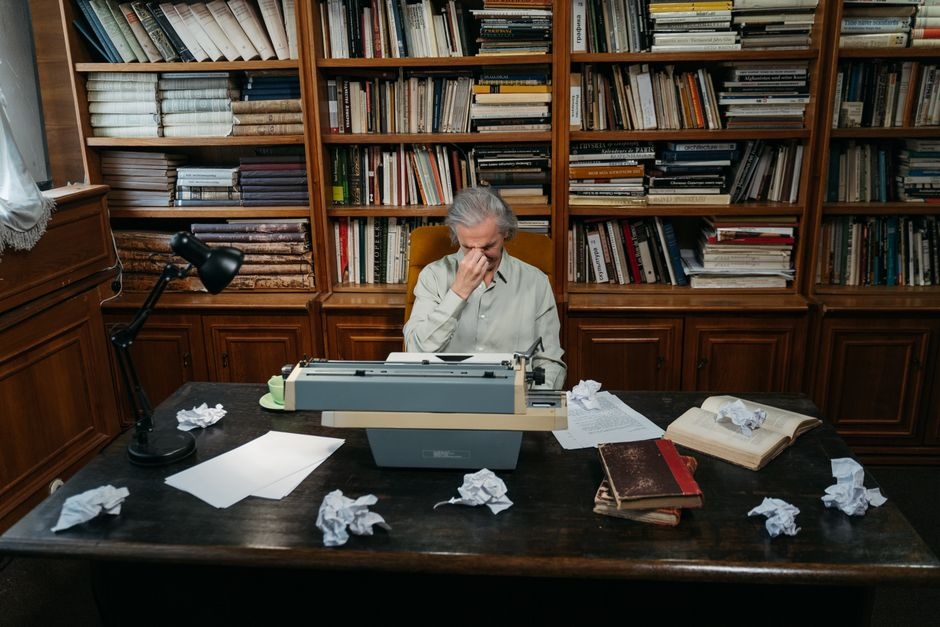
You stayed up until midnight finishing that chapter. You agonized over every word choice. You rewrote the opening line six times. And then - just to be safe - you ran your manuscript through an AI detection tool before submitting it to a literary contest.
The result came back: 74% AI-generated.
You wrote every single word yourself. And yet, according to the algorithm, you sound like a machine.
Welcome to one of the strangest, most unsettling new anxieties in indie publishing - and it's not going away anytime soon.
The Fear Is Real - And It's Growing
A year ago, most authors had never heard of AI detection tools. Today, they're part of the submission landscape. Literary agents are quietly running manuscripts through them. Writing contests are adding AI clauses to their rules. Publishers - particularly in academic and nonfiction spaces - are adopting tools like Turnitin and Originality.AI as part of their editorial workflow.
The intent is understandable. The explosion of AI-generated content is real, and gatekeepers want to protect the integrity of human creativity. But here's the problem nobody is talking about loudly enough: these tools are not reliable, and genuine human authors are being caught in the crossfire.
The fear isn't hypothetical. Authors across forums, writing communities, and social media are reporting false positives - their carefully crafted prose flagged as machine-generated, their credibility quietly questioned before they've even had a chance to make their case.
"The fear isn't hypothetical. Authors are reporting false positives - their carefully crafted prose flagged as machine-generated before they've even had a chance to make their case."
A Real-World Example That Should Alarm You
I recently spoke with an author - a client who writes literary fiction, someone with a distinctive, hard-won voice - who described his new writing ritual to me. After finishing a chapter, he runs it through an AI detection tool. If the score comes back above 20% AI-detected, he rewrites large sections. Then he runs it again. Sometimes a third time.
He's not using AI to write. He's using AI detection scores as a proxy for quality control - or rather, as a kind of nervous tic, a way of pre-empting rejection. He's essentially editing his own voice out of his work to satisfy an algorithm.
Is this the new normal? Are we really asking authors to write with one eye on their prose and one eye on a detection dashboard? And more importantly - is this sustainable for the creative process?
I don't think it is. And I think we need to talk about it.
The Fundamental Problem: Nobody Really Knows What These Tools Are Looking For
Here's the uncomfortable truth that AI detection companies don't advertise: their tools are probabilistic, not definitive. They analyze patterns - sentence structure, word frequency, syntactic predictability, vocabulary distribution - and compare them against statistical models of what AI output tends to look like.
But here's the irony buried inside that methodology: highly polished, well-edited prose can look "too clean" to these algorithms. Consistent sentence rhythm. Precise word choices. Logical paragraph flow. These are the hallmarks of skilled human writing - and they're also, apparently, suspicious.
A great human writer who has internalized the rules of good prose might actually score higher on AI detection than a mediocre one whose writing is messy, inconsistent, and full of the kind of organic imperfection that algorithms interpret as "human." That's not a flaw in the system - that's the system working exactly as designed, and it's deeply broken.
"A great human writer might actually score higher on AI detection than a mediocre one. That's not a flaw in the system - that's the system working exactly as designed, and it's deeply broken."
Can Human Writing Be Flagged as AI? Absolutely - Here's Why
Let's be direct: yes, human writing can and does trigger AI detection tools. And certain types of human writing are especially vulnerable.
- Clear, concise, structured writing - the kind every writing coach tells you to produce - can ironically resemble AI output because AI is trained on exactly this kind of writing.
- Academic and technical writing follows rigid structural conventions that look "formulaic" to detectors, even when they're entirely human-authored.
- Genre fiction with familiar tropes - the chosen one, the meet-cute, the reluctant hero - uses predictable narrative patterns that algorithms may flag as statistically likely AI output.
- Heavily revised manuscripts often lose the organic roughness of first drafts, making them cleaner and more "AI-like" in the eyes of detection models.
- Non-native English speakers who write in careful, deliberate prose to compensate for language insecurity are particularly at risk of false positives.
None of these are edge cases. They describe a significant portion of the writing world. And yet the tools being deployed against them treat a high AI score as near-conclusive evidence of wrongdoing.
The AI Detection Tools Authors Need to Know About
If you're submitting work anywhere that might run it through a detector, you should know what you're dealing with. Here are the main tools currently in use - and a word of warning before we dive in: run the same piece of text through all of them, and you'll often get wildly different results. That inconsistency alone should tell you something about how much you should trust any single score.
Currently one of the most cited tools used by publishers and content platforms. It's designed for professional use and claims high accuracy for GPT-4 and other modern models. It's a paid tool, but it's become something of an industry standard in certain publishing circles. If you're submitting to a publisher who mentions AI checking, this is likely what they're using.
Popular in academic settings and widely used by teachers and professors. It has a free tier, making it accessible to anyone who wants to test their own work. GPTZero uses "perplexity" and "burstiness" as its core metrics — essentially measuring how predictable and how varied your sentence structures are. Human writing tends to be "burstier" (more variation between long and short sentences), but not always.
Copyleaks combines AI detection with traditional plagiarism checking, which makes it attractive to publishers who want both in one tool. It supports multiple languages, which is relevant for authors writing in or translating from non-English languages. Its AI detection module has been expanding rapidly, though its accuracy rates are still debated in the writing community.
The granddaddy of academic integrity tools, Turnitin added AI detection capabilities in 2023 and has been rolling it out across universities globally. It's increasingly appearing in publishing contexts, especially for nonfiction, memoir, and academic writing. Turnitin's AI detection is particularly concerning for authors because it's embedded in institutional workflows — a flag here can have serious consequences with very little recourse.
Free, simple, and fast — Writer.com's AI detector is a good starting point for authors who want a quick check without committing to a paid subscription. It's not the most sophisticated tool on the market, but its accessibility makes it useful for a first pass. As with all tools, treat its results as one data point, not a verdict.
Important: Different tools consistently give different results on the same text. One tool may say 12% AI; another may say 68% on the exact same passage. This inconsistency is not a bug — it's a feature of how probabilistic these systems are. It should make everyone pause before treating any single score as authoritative.
What Can Authors Actually Do About This?
The situation is frustrating, but it's not entirely without recourse. Here are some practical steps you can take to protect yourself and your work - without compromising your voice.
- Run your own work through multiple tools before submission. Don't rely on a single detector. Check with Originality.AI, GPTZero, and Writer.com and compare the results. If they wildly disagree, that itself is useful context.
- Vary your sentence length and structure naturally. Not to fool the algorithm - but because it's good writing. Long sentences followed by short ones. Fragments, occasionally. Questions. Rhythm matters.
- Don't over-edit into "perfection. "Leave some natural roughness in your prose. A slightly imperfect word choice, a conversational aside, a digression - these are signals of human thought. Scrubbing them out in pursuit of polish can backfire.
- Keep your drafts, notes, and revision history.I f you're ever challenged, a paper trail matters. Use version history in Google Docs or Word. Keep your research notes. Save your brainstorming documents. These are evidence of a human creative process.
- Consider writing and editing tools that support your voice rather than flatten it. Tools like ProWritingAid focus on style and readability without generating content for you. Sudowrite can assist with creative exploration without replacing your authorship. These leave your fingerprints on the work.
- If you're submitting to a contest or publisher with an AI policy, read it carefully. Some policies ban AI-assisted writing entirely; others only ban AI-generated content. Know the distinction and know where you stand before you submit.
None of these are foolproof. But they're meaningful steps toward protecting your work and your reputation in an environment where the rules are still being written.

The Bigger Question: Are We Heading Somewhere Dangerous?
Let me ask you something that I've been sitting with for a while now: Are we heading toward a world where human authors have to prove they're human?
And if so - how is that fair? How do you prove a negative? How do you demonstrate that the words came from your mind, your experience, your late nights and your rewrites and your doubt and your stubbornness, and not from a language model?
The burden of proof is shifting onto authors in a way that feels deeply unjust. We've spent centuries building systems to protect writers - copyright law, attribution norms, literary traditions - and now those systems are being quietly undermined by tools that can't distinguish between a skilled human writer and a machine.
"We've spent centuries building systems to protect writers. Now those systems are being quietly undermined by tools that can't distinguish between a skilled human writer and a machine."
There's also a class dimension worth naming: authors who can afford to hire editors, who have the time to revise extensively, who write in a polished register - these are the very authors most likely to be flagged. Meanwhile, rushed, under-edited writing may sail through detection unscathed. If we're not careful, AI detection tools could end up penalizing literary quality itself.
Publishing has always had gatekeepers. But gatekeepers used to read the work. Now some of them are outsourcing that first judgment to an algorithm that doesn't understand context, intention, or craft. That's a problem worth taking seriously - and talking about loudly.
Let's Talk — We Want to Hear From You
Has your writing ever been flagged as AI-generated? Have you run your own work through any of these tools? Did the results surprise you — or confirm your fears?
We'd genuinely love to hear your experience. This is a conversation that the indie author community needs to be having openly, and The Backlist is committed to being part of it. Drop your thoughts in the comments below — whether you're furious, resigned, confused, or just curious. All of it is welcome here.
- Have you been flagged by an AI detector — even though you wrote every word yourself?
- Which tools have you tested your own work with, and what did you find?
- Are you changing how you write because of AI detection anxiety?
- What do you think publishers and contest organizers should do differently?
The more we share, the better picture we build of what's actually happening out there. And the more loudly we speak up, the harder it becomes for the industry to ignore us.
Editor's Note: This is an evolving topic, and The Backlist will continue to cover it as the landscape changes. We'll be following new tools, policy changes from publishers and contest organizers, and the ongoing conversation in the author community. If you have a story, a tip, or a resource you'd like us to cover, reach out — we read everything.
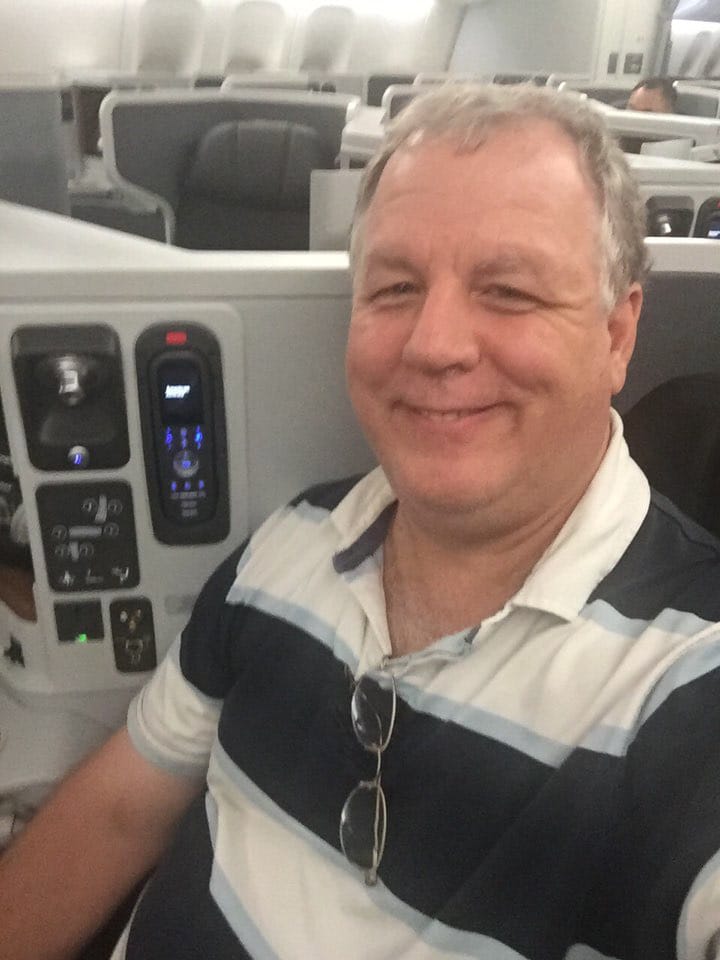
Hi, I'm Tim Hewitt
CEO of AuthorHub.io
I won my first writing scholarship in high school by beating more than 300 other writers in a nationwide contest, and that award gave me something money couldn't buy: the belief that my words mattered. Since then I've spent decades learning what makes writing work: how to find your voice, how to keep readers turning pages, marketing that really sells books, and how to spot the small craft problems that quietly sink good stories. This blog is where I share everything I've picked up along the way.