The Pitfalls of Running Facebook Ads Directly for Book Sales
Wednesday, April 08, 2026
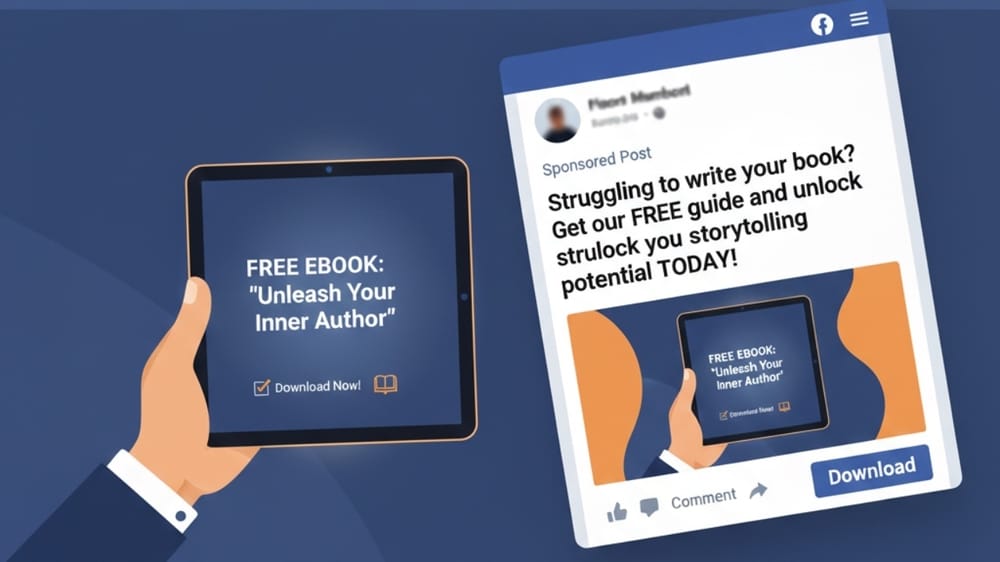
I'm going to say something that might sting a little, especially if you've already spent money on this: Running Facebook ads directly to your book sales page is almost certainly losing you money. I know, I know - every marketing guru on YouTube makes it sound so simple. "Just set up an ad, point it to your Amazon page, and watch the royalties roll in." But the math doesn't work, and it's time we had an honest conversation about why.
The Cold, Hard Math of Direct-to-Sale Ads
Let's run the numbers together. The average cost per click (CPC) on Facebook in 2026 hovers somewhere between $0.50 and $1.50 for most niches. For book-related audiences, you're often looking at $0.80 to $1.20 per click. Now, let's say you're selling a Kindle book at $4.99. After Amazon takes its cut, you're pocketing roughly $3.50 per sale.
Here's where it falls apart: not everyone who clicks your ad is going to buy. Industry conversion rates for cold traffic landing on a book sales page typically range from 1% to 5%. Let's be generous and say you convert at 3%. That means for every 100 clicks, you get 3 sales.
So you spent $100 on clicks (at $1.00 each), earned 3 sales at $3.50 profit each, and walked away with $10.50 in royalties against $100 in ad spend. You just lost $89.50. Even if your CPC is lower and your conversion rate is higher, the margins are razor-thin at best and catastrophic at worst. For most authors, this is not a strategy - it's a slow bleed.
Why Cold Traffic Doesn't Buy Books
Think about your own behavior for a second. When was the last time you were scrolling through Facebook, saw an ad for a book by an author you'd never heard of, clicked through, and immediately bought it? Probably never. And if you did, you're in a very small minority.
Buying a book is a trust-based decision. Readers want to know that the author understands them, that the writing is good, and that the book will be worth their time. A Facebook ad - no matter how beautifully designed - cannot build that trust in a single impression. You're asking a complete stranger to hand over their money based on a 3-second scroll-by. It's the equivalent of proposing marriage on a first date.

The Strategy That Actually Works: Lead With Value, Not a Sales Pitch
Here's what smart authors are doing instead - and it's not complicated, it just requires a shift in mindset. Instead of running ads to sell a book, run highly targeted ads to give something away for free in exchange for an email address.
This "something free" is called a lead magnet, and it could be any number of things:
- A free chapter or preview of your book
- A short companion guide or workbook related to your book's topic
- A free short story set in the same universe (for fiction authors)
- A checklist, cheat sheet, or resource list your ideal reader would love
- An exclusive "deleted chapter" or behind-the-scenes content
The key is that the lead magnet must be genuinely valuable and directly relevant to the audience who would buy your book. If you've written a thriller novel, offer the first three chapters. If you've written a personal finance book, offer a budgeting template. The closer the lead magnet is to your book's core promise, the more qualified your email subscribers will be.
Why This Approach Changes Everything
The economics flip entirely when you're running ads to a lead magnet instead of a sales page. Here's why:
1. Conversion rates skyrocket. People are far more willing to give you their email address for something free than they are to pull out their credit card. Instead of a 3% conversion rate, you're looking at 20% to 40% opt-in rates on a well-crafted landing page. That means your cost per lead drops dramatically - often to $0.50 to $2.00 per email subscriber.
2. You own the relationship. When someone buys your book on Amazon, Amazon owns that customer. You have no way to contact them again. When someone joins your email list, you own that connection. You can reach them anytime, for free, for as long as they stay subscribed.
3. You can nurture trust over time. This is the big one. Instead of asking for a sale on the first interaction, you get to build a relationship. You get to show up in their inbox, share your story, demonstrate your expertise, give them more value, and gradually become someone they know, like, and trust.
The Email Nurture Sequence: Where the Magic Happens
Once someone is on your email list, you don't immediately blast them with "BUY MY BOOK!" That's just the Facebook ad problem with a different hat on. Instead, you set up an automated email sequence that does the heavy lifting of relationship-building for you.
A simple nurture sequence might look like this:
- Email 1 (Day 0): Deliver the lead magnet and introduce yourself warmly
- Email 2 (Day 2): Share your personal story - why you wrote the book, what drives you
- Email 3 (Day 4): Provide additional value - a tip, insight, or bonus content
- Email 4 (Day 6): Share social proof - reviews, testimonials, reader stories
- Email 5 (Day 8): Soft pitch your book with a compelling reason to buy now
- Email 6 (Day 11): Address common objections and share a final reader testimonial
- Email 7 (Day 14): Direct, confident call to action with urgency or a bonus
By the time you ask for the sale in email 5, 6, or 7, you're no longer a stranger. You're someone who has shown up consistently, provided value, and earned the right to make an offer. The conversion rate on a warm, nurtured email list is dramatically higher than cold Facebook traffic - often 5x to 10x higher.
The Compounding Effect Most Authors Miss
Here's what makes this strategy truly powerful in the long run: your email list is a compounding asset.
When you run ads directly to a book sale, each sale is a one-time transaction. The money is spent, the sale is made (or not), and you start from zero again tomorrow. But when you build an email list, every subscriber you add stays with you. Six months from now, when you launch your next book, you don't need to spend a single dollar on ads to reach those people. You just send an email.
Think about what this means practically:
- Your second book launch costs you almost nothing to promote
- You can survey your list to find out what they want to read next
- You can offer bundles, special editions, or companion products
- You can ask for reviews and ratings from people who already love your work
- You can build anticipation for upcoming releases with behind-the-scenes updates
An author with a 5,000-person email list who launches a new book can realistically expect 250 to 500 sales in the first week just from email alone. Try getting those numbers from cold Facebook ads without spending thousands.
"But I Just Want to Sell Books, Not Become an Email Marketer"
I hear this objection all the time, and I get it. You became a writer because you love writing, not because you dreamed of crafting email sequences. But here's the reality: the authors who consistently sell books in 2026 and beyond are the ones who own their audience.
You don't need to become a full-time marketer. You need to set up one lead magnet, one landing page, one automated email sequence, and one targeted Facebook ad campaign. That's it. Once it's built, it runs on autopilot. You spend 30 minutes a week checking your numbers and writing one broadcast email to your growing list. The rest of your time? Write your next book.
Compare that to the alternative: constantly throwing money at Facebook ads that send cold traffic to a sales page, watching your ad spend climb while your royalties trickle in, and having nothing to show for it when you turn the ads off. No list. No relationship. No audience. Just a lighter wallet.
The Targeting Advantage You're Not Using
One more thing worth mentioning: when your goal is email opt-ins rather than direct sales, your Facebook ad targeting becomes significantly more effective. You can target readers of similar authors, fans of specific genres, followers of book-related pages, and people who have engaged with reading-related content.
Because the barrier to entry is so low (free content in exchange for an email), you cast a wider net of qualified leads. And once those people are on your list, Facebook's algorithm can create lookalike audiences based on your subscribers - giving you even cheaper leads over time. It's a virtuous cycle that gets more efficient the longer you run it, which is the exact opposite of direct-to-sale ads that get more expensive as you exhaust your best audiences.
The Bottom Line
If you're an author running Facebook ads directly to your book sales page and wondering why you're not seeing a return, please stop. You're not doing it wrong - the strategy itself is fundamentally flawed for most authors at most price points.
Instead, invest that same ad budget into building an email list through a compelling lead magnet. Yes, it requires a bit more setup. Yes, the payoff isn't instant. But within a few months, you'll have something infinitely more valuable than a handful of one-off sales: a growing audience of people who chose to hear from you, who trust your voice, and who will buy your books - not because an algorithm showed them an ad, but because they genuinely want to read what you write.
That's not just a better marketing strategy. That's the foundation of a sustainable writing career.
Have you tried running Facebook ads for your books? I'd love to hear about your experience - what worked, what didn't, and what you're planning to try next.
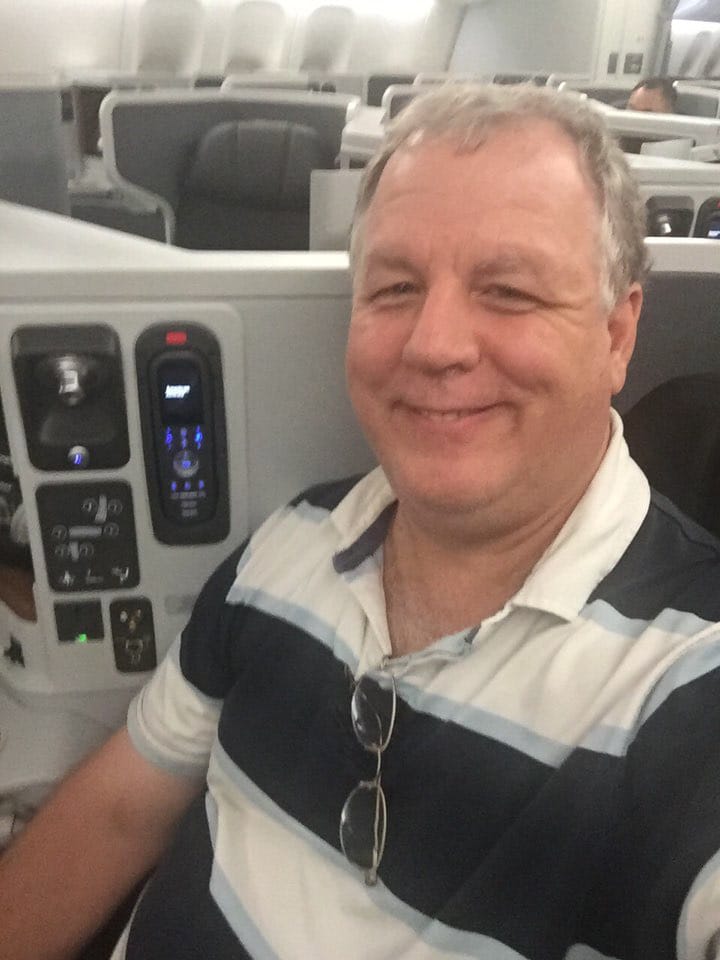
Hi, I'm Tim Hewitt
CEO of AuthorHub.io
I won my first writing scholarship in high school by beating more than 300 other writers in a nationwide contest, and that award gave me something money couldn't buy: the belief that my words mattered. Since then I've spent decades learning what makes writing work: how to find your voice, how to keep readers turning pages, marketing that really sells books, and how to spot the small craft problems that quietly sink good stories. This blog is where I share everything I've picked up along the way.