
What Should You Write in Your Journal? A Guide for Authors
Saturday, July 18, 2026

If there is one question authors ask more than almost any other, it is this: "What am I supposed to write in my journal?" It sounds almost too simple, doesn't it? You are a writer. Surely you of all people should know what to write. And yet, the blank journal page can feel just as intimidating as the blank manuscript page, sometimes more so.
Here is the thing: not all journaling is created equal, and what you write depends entirely on why you are writing it. There are really two distinct purposes a journal can serve for an author. The first is private journaling: the raw, unfiltered, personal practice that sharpens your craft and keeps you sane. The second is public journaling: the thoughtful, behind-the-scenes content that builds a genuine connection with your readers.
Both matter. Both are powerful. And neither one has to be perfect. Let's dig into each.
Part One: Private Journaling for Authors
Your private journal is not for anyone else. It is not polished, it is not publishable, and it absolutely does not need to be. Think of it as the backstage of your creative life: the place where you can be messy, honest, uncertain, and wildly imaginative without consequence.

Daily Writing Warm-Ups and Stream of Consciousness
Before you open your manuscript, open your journal. Write whatever comes to mind, no filter, no structure, no agenda. Even five minutes of free-flowing thought can clear the mental clutter and get your creative engine running. Think of it like stretching before a run. You would not sprint a mile cold. Do not write cold either.
Character Studies and Plot Brainstorming
Your journal is the perfect sandbox for your characters. Write a scene from your antagonist's point of view. Interview your protagonist. Ask your characters questions and let them answer. Explore plot tangents that will never make it into the book but help you understand your story world more deeply. This kind of exploratory writing almost always reveals something surprising, and sometimes those surprises end up being the best parts of your manuscript.
Processing Rejection, Writer's Block, and Creative Frustration
This one is not optional. It is essential. When a rejection email lands in your inbox, when the words refuse to come, when you read your own draft and want to light it on fire: write about it. Not to wallow, but to process. Getting your frustration out of your head and onto the page is one of the most effective ways to move through it rather than getting stuck in it.
Your journal holds space for the parts of the creative life that nobody else sees. Use it.
Tracking Writing Goals, Word Counts, and Progress
Use a section of your journal to track your writing sessions. Note the date, how long you wrote, your word count, and how you felt. Over time, this becomes an incredibly motivating record of your progress. On the days when it feels like you are getting nowhere, you can flip back and see exactly how far you have come.
Capturing Ideas, Overheard Conversations, and Observations
Authors are observers by nature. Your journal is where those observations live. The way a stranger laughed on the subway. The argument you overheard at the coffee shop. The odd phrase your child said at dinner. The image that stopped you mid-walk. These small, specific details are the raw material of authentic fiction, and they disappear from memory faster than you think. Write them down.
Emotional Processing That Feeds Authentic Storytelling
The most resonant writing comes from emotional truth. When you are going through something difficult, joyful, confusing, or surprising, write about it in your journal. Not necessarily to use it directly in your work, but to stay connected to the full range of human experience. Writers who are emotionally present in their own lives write characters who feel alive on the page.
Morning Pages: The Julia Cameron Method
If you have not read The Artist's Way by Julia Cameron, add it to your list. Cameron's concept of "morning pages" is simple: every morning, before you do anything else, write three pages by hand. No topic, no rules, no editing. Just three pages of whatever is in your head.
It sounds almost too easy. But writers who commit to this practice consistently report that it clears creative blocks, generates unexpected ideas, and creates a reliable daily writing habit. The morning pages are not meant to be good. They are meant to be honest. That distinction is everything.
Part Two: Public Journaling (What Readers Actually Want to Read)
Public journaling is a different animal entirely. This is content you share: on your website, your newsletter, your social media, or a dedicated author blog. And here is what many authors get wrong about it: readers do not want polished and perfect. They want real.
Your readers are not just fans of your books. They are fans of you: your voice, your process, your perspective. Public journaling is how you let them in.
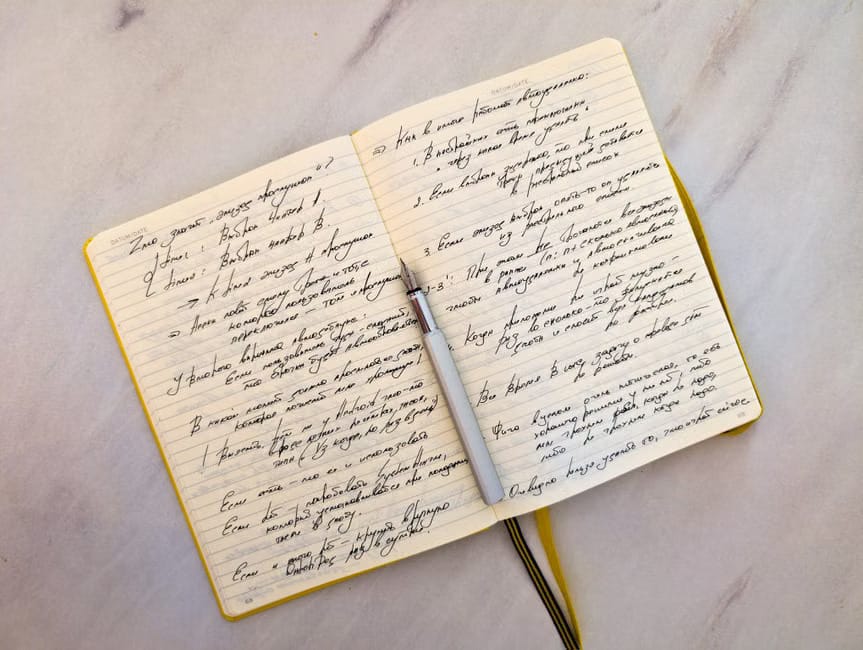
Behind the Scenes of the Writing Process
Walk your readers through what it actually looks like to write a book. Where do you write? What does your desk look like? What music do you listen to, or do you need complete silence? What does a typical writing day look like for you? These details feel mundane to you but are genuinely fascinating to readers who love your work and want to understand how it comes to life.
The Messy Middle: Struggles, Doubts, and Breakthroughs
This is the content that builds the deepest loyalty. When you share that you are stuck on chapter fourteen, that you rewrote the ending four times, that you almost scrapped the whole project last Tuesday: readers connect with that vulnerability. It reminds them that creating something meaningful is hard for everyone, even their favorite authors. And when the breakthrough comes, they get to celebrate it with you.
Research Rabbit Holes and Interesting Discoveries
Did your research take you somewhere unexpected? Did you spend three hours reading about Victorian mourning jewelry for one paragraph in your novel? Did you discover a historical fact so strange you almost did not include it because readers would think you made it up? Share it. Research rabbit holes make for some of the most entertaining and educational journal entries, and they give readers a deeper appreciation for the work that goes into a book.
Character and World-Building Decisions (and Why You Made Them)
Readers are endlessly curious about the choices authors make. Why did you give your protagonist that particular flaw? Why is the story set in that specific city? Why did you choose a first-person narrator instead of third? These behind-the-scenes decisions are fascinating to the people who love your work. Write about them. Explain your thinking. Readers feel like insiders when you bring them into your creative decision-making process.
The Personal Experiences That Inspired the Book
Every book has a seed: a memory, a conversation, a moment of grief or wonder or confusion that planted the idea. Share that story. Not the whole story if it is too personal, but enough to give readers a glimpse of the human experience behind the fiction. This kind of transparency creates a bond between author and reader that no amount of marketing can manufacture.

The Publishing Journey: Rejections, Milestones, and Lessons Learned
The publishing world is opaque to most readers. They have no idea how many rejections the average author collects before landing an agent, or how long the gap between signing a contract and seeing the book on shelves really is. Sharing your publishing journey, honestly and without bitterness, is both valuable and compelling. It demystifies the process for aspiring writers and gives your existing readers a new appreciation for what it took to get your book into their hands.
Reader Q&A Responses Turned Into Journal Entries
Pay attention to the questions your readers ask you, in emails, at events, in social media comments, in reviews. Those questions are content gold. Take one question and turn it into a thoughtful journal entry. "A reader asked me last week why I killed off a certain character. Here is the honest answer..." This format is engaging, personal, and directly responsive to what your audience already wants to know.
Part Three: Practical Tips for Both Types of Journaling
Whether you are journaling privately or publicly, a few simple practices will make the whole thing more sustainable and more valuable.

- Write without editing yourself. The internal editor is the enemy of journaling. Turn it off. You are not writing for publication (or if you are, you will edit later). Let the words come out unfiltered. Ugly, awkward, repetitive words are fine. Getting them out is the whole point.
- Set a minimum time or word count, and keep it small. Ten minutes counts. Two hundred words counts. A single paragraph counts. The goal is consistency, not volume. A small daily practice will serve you far better than an occasional marathon session.
- Keep a dedicated journal, separate from your manuscript files. Do not mix your journaling into your Scrivener project or your Google Docs drafts. Give it its own space, whether that is a physical notebook or a separate digital file. The separation matters psychologically. It signals to your brain that this space has different rules.
- Date every single entry. Always. Without exception. You will thank yourself later when you are reading back through and trying to remember when you had a particular idea or how you were feeling during a specific stage of your project.
- Do not overthink it. The goal is consistency, not perfection. A journal entry that says "I have nothing to say today and I am tired and I do not know where this book is going" is a valid and valuable journal entry. Show up. Write something. That is it.
Start Today. One Sentence Is Enough.

The greatest writers in history kept journals. Kafka. Woolf. Steinbeck. Sylvia Plath. Anaïs Nin. Tolstoy. Their journals were not footnotes to their careers. For many of them, those journals became their most treasured and widely read works, windows into a creative mind at work, in all its doubt and brilliance and stubborn persistence.
You do not have to write three pages this morning. You do not have to commit to a daily practice starting next Monday. You just have to write one sentence today. One honest sentence about where you are, what you are working on, or how you are feeling about your writing life.
That is the whole beginning. One sentence. And then another tomorrow.
Your journal is not a record of who you are as a writer. It is the practice of becoming one. Open it up.
A note on tools: Whether you prefer a physical notebook (there is something irreplaceable about pen on paper), a dedicated app like Day One or Notion, or even a simple text file on your desktop, the tool matters far less than the habit. Use whatever removes friction and makes you most likely to actually show up. The best journal is the one you actually write in.

Hi, I'm Tim Hewitt
CEO of AuthorHub.io
I won my first writing scholarship in high school by beating more than 300 other writers in a nationwide contest, and that award gave me something money couldn't buy: the belief that my words mattered. Since then I've spent decades learning what makes writing work: how to find your voice, how to keep readers turning pages, marketing that really sells books, and how to spot the small craft problems that quietly sink good stories. This blog is where I share everything I've picked up along the way.