Book Marketing Basics
Saturday, November 07, 2026
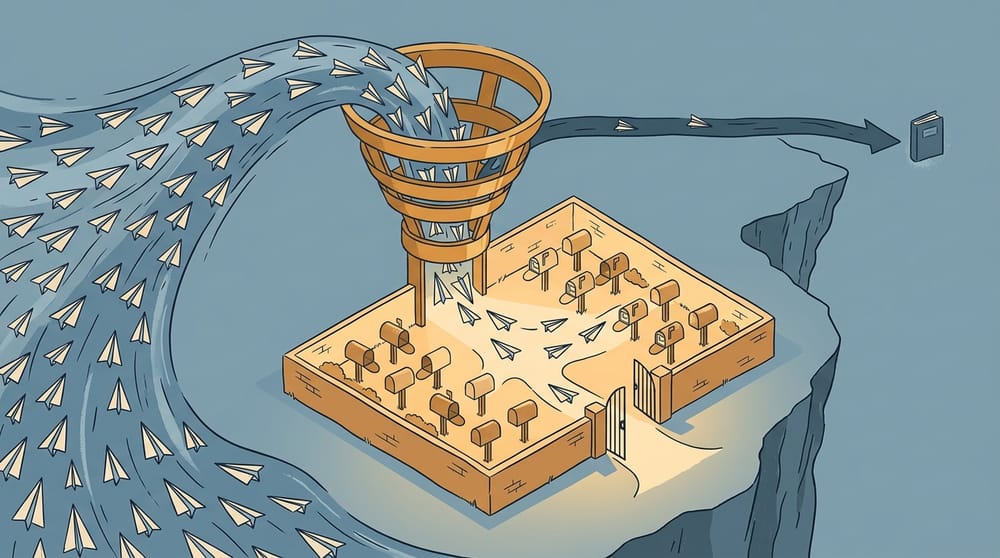
A few years ago we wrote a post warning authors off a very specific mistake: running Facebook ads that point cold traffic straight at a book sales page and expecting the ROAS math to work out. That warning still stands. What has changed is everything about how you actually target those ads, and if you are still building campaigns the way you would have in 2019, you are wasting money in a new and more frustrating way.
This post updates the original with what actually works on Facebook right now, in plain terms, with no nostalgia for the "good old days" of interest stacking.
The problem was never just the targeting. It was sending cold clicks to a page that asks for money before you have earned any trust.
Why direct-to-sales-page ads still don't work
The core problem with "click ad, land on Amazon, buy book" has not changed, and it is worth restating because most authors still run into it blind.
- Book margins are thin. A $4.99 ebook or a $14.99 paperback leaves very little room to pay for a cold click, let alone the several clicks most people need before they buy anything.
- Facebook's algorithm needs conversion volume to optimize. A single low-dollar sale, days or weeks apart, does not give Meta enough signal to find more buyers like the one you got.
- Amazon does not allow you to install a pixel or Conversions API on its checkout. You are advertising toward a black box. You will never know which ad, audience, or creative actually drove the sale.
- Cold audiences almost never buy a book from a single ad impression. Books are a considered purchase, even at ten dollars. People need to see your name more than once before they hand over money.
None of that is new. What is new is that the old workaround, narrow interest targeting and lookalike audiences, no longer gives you a reliable way to compensate for it.
What actually changed on Facebook
For years the standard advice was to stack interests like "Stephen King" and "thriller novels" and layer on a lookalike audience built from your email list or pixel data. That approach is largely dead, and it is worth understanding why before you rebuild your campaigns.
iOS privacy changes stripped away a huge amount of the signal Facebook used to rely on to build accurate lookalikes and to track what happened after the click. At the same time, Meta has pushed hard toward Advantage+ campaigns, which use its own machine learning across a broad pool of people instead of the narrow interest buckets you used to hand-pick. The algorithm, when it has good data to work with, is now simply better at finding buyers than manual interest stacking ever was.
The practical result: narrow audiences now often perform worse than broad ones, because you are actively restricting the algorithm's ability to find the people most likely to convert.
Old model
Narrow interests, layered exclusions, lookalikes from thin data, direct link to a purchase page.
Current model
Broad Advantage+ targeting, strong creative, a funnel before the ask, retargeting on warm traffic.
The model that works now
Broad targeting only works if you give the algorithm two things it needs: strong creative that earns the click, and clean conversion data to optimize toward. That second part is where most author campaigns quietly fail, because Amazon will never give you that data.
The fix is to stop sending the ad to the sales page at all. Send it to a reader magnet, a free first-in-series, or a newsletter squeeze page you control. That page can carry a pixel and a proper Conversions API setup, which means Meta finally has real signal to optimize against. From there, email does the selling.
A lead is a conversion event Meta can optimize toward. An Amazon sale, from Meta's point of view, might as well not exist.
Once that funnel exists, your highest-value audience is not a cold interest group at all. It is the people who already raised a hand: website visitors, email subscribers, video viewers who watched a chunk of your ad. Retarget them hard. That is where the actual sales come from now, and it is also the audience with the best margins because the clicks are cheap.
The other shift is where you spend your testing budget. Instead of testing ten narrow audiences against each other, test five hooks against one broad audience. Different opening lines, different thumbnails, different angles on the same book. Creative is now the lever. Audience selection mostly is not.
The step-by-step version
- Build the funnel first. A landing page for a reader magnet, a free first-in-series download, or a newsletter squeeze page, not a link straight to your sales page.
- Install proper tracking. A Meta pixel and Conversions API set up correctly on that page, so the algorithm has real conversion data to learn from.
- Start broad with Advantage+. Resist the urge to narrow the audience down. Let Meta's targeting do the work it is now built to do.
- Test creative and copy, not audiences. Run several hooks and angles against the same broad audience and let the data tell you which one earns the click.
- Build retargeting sequences for warm traffic. Website visitors, email openers, and video viewers get a different, more direct ad than cold traffic ever should.
- Nurture through email before you ask for the sale. Let the relationship do the selling that a single ad view never could.
Notice what is missing from that list: interest stacking, lookalike-only campaigns, and a direct link to Amazon. That is intentional. All three used to be standard advice. None of them hold up well anymore.
You need the funnel before you run the ads
The AuthorHub.io blog identifies the tools and services that help authors build the reader magnet pages, squeeze pages, and email sequences this whole model depends on. If the funnel is the missing piece, that is exactly where to start.
Hi, I'm Tim Hewitt
CEO of AuthorHub.io
I won my first writing scholarship in high school by beating more than 300 other writers in a nationwide contest, and that award gave me something money couldn't buy: the belief that my words mattered. Since then I've spent decades learning what makes writing work: how to find your voice, how to keep readers turning pages, marketing that really sells books, and how to spot the small craft problems that quietly sink good stories. This blog is where I share everything I've picked up along the way.